
How Airports Keep Passengers Informed When Staffing Is at an All-Time Low
Airport staffing has been under pressure for years. The pandemic hollowed out workforces that took decades to build, and the recovery has been slower than passenger numbers suggest. Ground crews, gate agents and security staff across almost every role are running leaner than before. And the passengers keep coming.
Nearly 10 billion people moved through airports globally in 2025. The teams managing them are not at record levels. That gap is the defining operational challenge in airport operations right now, and it shows up at every point in the terminal. How airports handle passenger communication under these conditions is increasingly what separates a good passenger experience from a frustrating one.
The Work Has Already Started Before Passengers Walk In
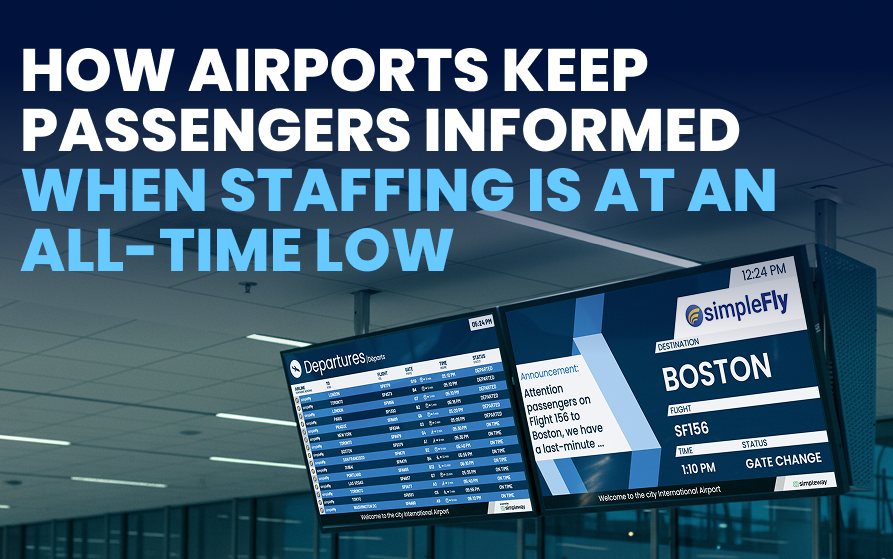
Most airports have digital displays. The question is whether those displays are working together. A departures board that updates automatically while a check-in counter display still needs a manual refresh, or a wayfinding sign pointing to a gate that has already changed, these are the gaps that create confusion and they are more common than airports would like to admit.
When a flight status changes in real time, passengers expect every screen relevant to their journey to reflect that change immediately. When it does not, they stop, look around, and ask the nearest member of staff. That staff member, already managing several other things, now has to answer a question that a connected passenger information system should have handled automatically.
The airports doing this well have unified their FIDS, announcement systems, and flight data into a single platform. When something changes in the operational database, departures boards, check-in displays, wayfinding signs, and PA announcements all update at the same time without anyone pushing it manually. Every question a screen answers is a question a staff member does not have to.
Security Is Where Staffing Pressure Hits Hardest
No part of the airport journey concentrates the staffing challenge more visibly than security. Lines are long, passenger anxiety is high, and the number of staff available to direct and inform has not kept pace with demand. In the US, TSA callout rates have reached levels that have forced some airports to consolidate checkpoints and extend wait times significantly.
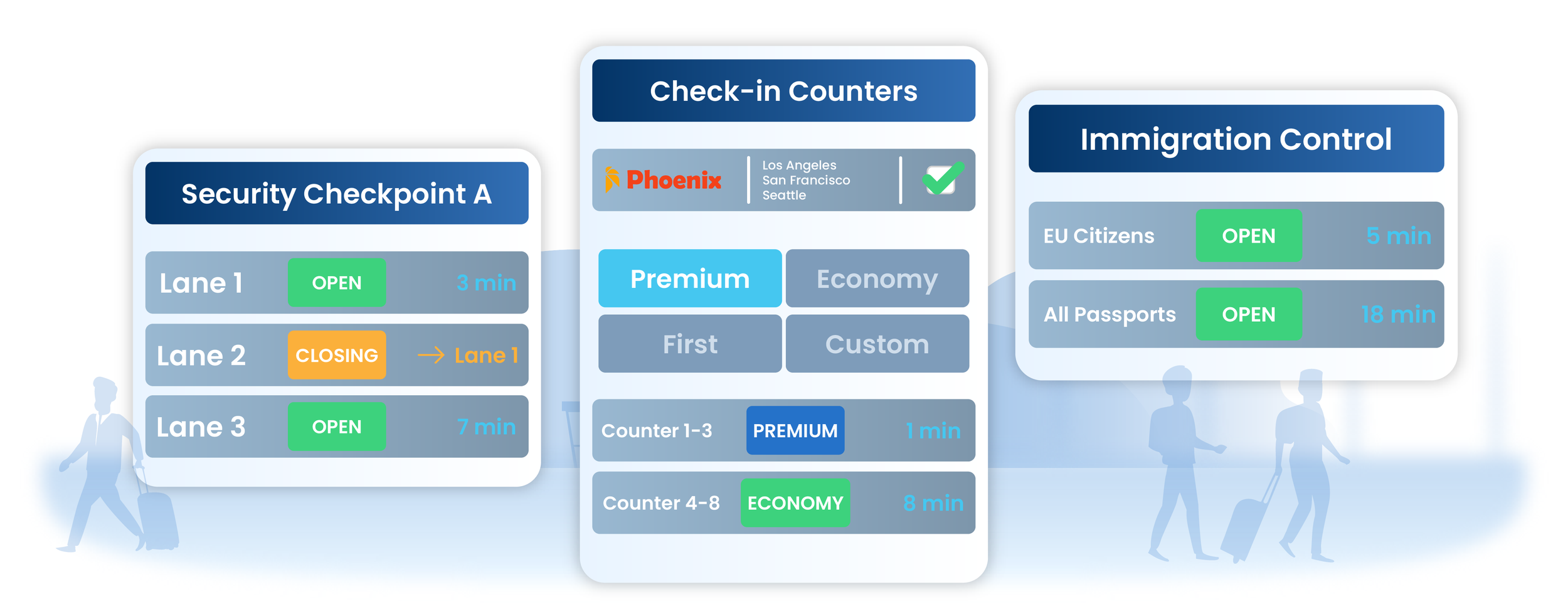
What most passengers experience as a queue problem is often a communication problem. When people do not know which lane is open, how long each lane will take, or where to go when a lane closes, lines cluster unevenly and bottlenecks form.
Displaying live lane status, wait times, and directional information gives passengers the data they need to make good decisions without staff intervention. When a lane closes, displays update and announcements play automatically. This is not a replacement for security staff. It is a way of extending what a small team can communicate across a large, busy space.
Does Boarding Really Need Someone at Every Microphone?
Gate changes, boarding calls, priority announcements, final calls and delay notifications each need to reach the right passengers at the right gate at the right time. In a traditional setup, that means a gate agent making each call manually. At an airport running a reduced team across multiple gates simultaneously, it becomes a source of missed calls, irregular operations and frustrated passengers.
Automated announcement systems change this dynamic. When connected to live flight data, they trigger the right announcement at the right moment without anyone initiating it. A boarding status change triggers a boarding call. A gate change triggers a notification to the old gate and an update at the new one. Final calls fire automatically based on departure time.
The gate agent is still there managing the physical boarding process. They are just no longer responsible for every PA call as well. This kind of airport automation is not about removing people from operations. It is about making sure the right information reaches passengers at the right time, regardless of how many staff are available to deliver it manually.
As Antony Hart, Airport Operations Delivery Lead at Auckland International Airport, noted after implementing Airport CX: "These features have improved the boarding process and reduced the need for manual announcements."
What the Best-Run Airports Have in Common
Staffing shortages are not going away. The pipeline of trained aviation workers remains constrained, passenger demand keeps growing, and the pressure on airport teams shows no sign of easing.
The airports managing this well are not doing so by working harder. They are doing so by being smarter about where human effort goes. Airport communication infrastructure that responds automatically to real-time flight data takes the routine, time-sensitive work of keeping passengers informed off the team's plate, so staff can focus on the situations that genuinely need a person involved.
That is the shift happening at airports that are ahead of this challenge. For airports still relying on manual processes for passenger information and announcements, the gap between them and those airports grows a little wider every day.
If you want to see how Airport CX approaches this, start with a free demo or join one of our webinars.